
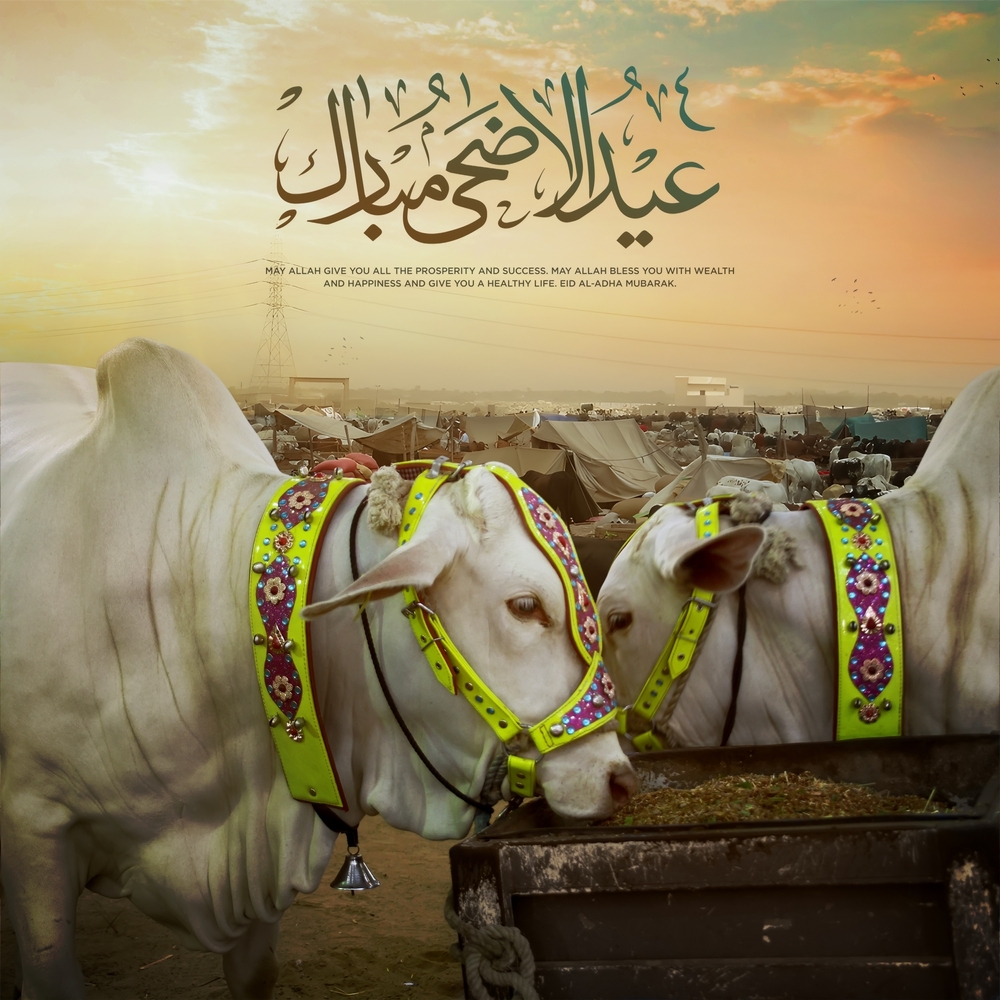
Eid ul Adha, often referred to as the “Festival of Sacrifice,” is among the most significant religious observances honored by Muslims across the globe. This occasion marks the readiness of Prophet Ibrahim (Abraham) to offer his son, Ismail (Ishmael), as a tribute to God’s command. However, God interceded and provided a ram to be sacrificed in his stead. This expression of faith is honored and celebrated during Eid ul Adha.
The timing of Eid ul Adha is set by the Islamic lunar calendar, which follows the moon’s sighting. Consequently, the date shifts each year in relation to the Gregorian calendar. The festival is celebrated on the 10th day of Dhu al-Hijjah, the twelfth and concluding month of the Islamic calendar. The festivities usually extend over a period of three to four days.
https://makerworld.com/en/community/post/315639
A key ritual of Eid ul Adha involves the sacrifice of an animal, typically a sheep, goat, or cow. This act, known as “Qurbani,” represents Prophet Ibrahim’s resolve to sacrifice his son. The meat from the sacrificed animal is traditionally divided into three portions: one-third for the family, one-third for friends and relatives, and one-third for the less fortunate. This practice of sharing and charity is an essential part of the Eid ul Adha celebrations.
Eid ul Adha is a moment for family reunions, feasting, and exchanging gifts. Muslims don their most elegant attire, participate in special prayers at the mosque, and visit with relatives and friends. It is a period filled with joy, thankfulness, and contemplation. The holiday coincides with the Hajj pilgrimage to Mecca, one of the Five Pillars of Islam, highlighting its importance for Muslims.
In numerous Muslim-majority nations, Eid ul Adha is recognized as a public holiday, with government offices, schools, and businesses shuttered. The duration of the holiday varies by country, but generally, it provides an opportunity for families to come together and engage in the celebrations. This holiday period is characterized by heightened travel as people return to their hometowns to commemorate with loved ones
The observance of Eid ul Adha also underscores the significance of community and aiding those in need. Muslims are urged to contribute to charity and share their fortunes with others. This ethos of generosity and empathy is a fundamental principle of Islam and is particularly accentuated during this festive season.
The customs associated with Eid ul Adha may differ slightly from one region to another, yet the core themes of faith, sacrifice, and community remain uniform. Whether it’s the types of dishes served, the clothing style adopted, or the local traditions practiced, Eid ul Adha is a time for rich cultural expression and united religious observance.
In summary, Eid ul Adha holds immense importance for Muslims globally. It serves as a time to commemorate the faithfulness of Prophet Ibrahim, to express gratitude to God, to fortify family connections, and to extend a helping hand to those in need. The holiday acts as a reminder of the fundamental tenets of Islam: faith, sacrifice, compassion, and community.
 Trending News 47